


The world of Migrantour is vast and varied. In addition to the partners in the European network of cities where Migrantour walks take place, over the years, we have had the pleasure of getting in touch and collaborating with people and organisations that carry out projects that are similar in some ways to Migrantour or that, inspired by the Migrantour project, have launched interesting cultural activities.
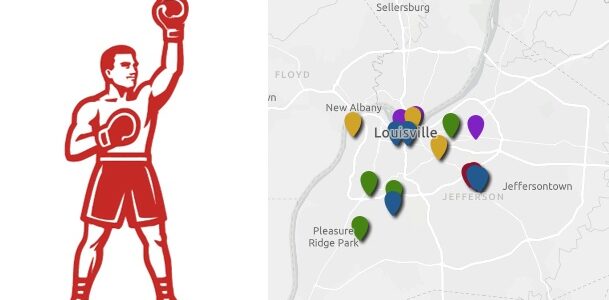
This is the case, for example, of anthropologist Lisa Björkman, who has created an initiative in Louisville (Kentucky, United States) to realize a set of storymaps of the (other) heritage of the city, worldwide known for being the birthplace of Muhammad Alì, boxing champion and activist for civil rights. Storymaps are a research tool that Migrantour has used extensively, especially in the “Sustainable Routes” project.
Louisville’s (Other) Heritages storymap seeks to enrich our understanding of Louisville’s heritage by amplifying voices and perspectives that tend to be less prominent in Louisville’s official histories and received urban heritage narratives: those of Louisvillians with more-recent migration backgrounds. The story map foregrounds the role – both historical and contemporary – that migration has played in Louisville’s development and transformation, and is motivated by the understanding that migration is not exceptional, but is (and has always been) a driving force in our shared human history.
Louisville’s historically intransigent Black-White racial divide is built into the city’s residential and infrastructural fabric, and reproduces itself even as the demographics undergo dramatic transformation. Foreign-born Louisvillians often reside in neighborhoods where opportunities for everyday cross-cultural and inter-community contact (especially for non-elites) can be very limited. It is this want of occasion and opportunity for everyday encounters across difference – and the curiosity that it might inspire – that Louisville’s (other) Heritages aspires to address. The storymap invites you to move through and experience the richness of Louisville’s off-the-beaten-track spaces and places – to encounter the diversity of heritage stories and experiences shared in the tours. The tours challenge the narrow, identity-based notions that inform popular discourses about migration in our city and society. Instead, Louisville’s (other) Heritages invites our tour to represent their own (his)stories and heritages, and in so doing to open up new conversations and ways of imagining (and creating) our shared urban future.
The research for Louisville’s (other) Heritages was collaborative: Lisa and her team invited five Louisvillians with first-generation migration backgrounds to take them on tours that introduce them to places/spaces in Louisville that are meaningful and have heritage significance for them. While introducing each of the sites on their tour, the guides recounted the stories and memories attached to that particular location in the city – the stories that render that place important as a heritage space.
Central to the project, in other words, is the notion that “heritage” is not reducible to (or determined by) ideas about the culture or traditions that may be predominant in someone’s birth nationality or country of origin. Instead, Lisa and her team have sought to allow the meaning and significance of their guides’ migration histories to emerge through their accounts of how those experiences have informed their lives, aspirations, and hopes for the future here in Louisville.
Follow this link to explore the storymaps in the Louisville (other) heritage website!